We use cookies to improve your experience on our website. By continuing you acknowledge cookies are being used.

If the key to successful comedy is timing, the key to successful investing is just plain time.
Yes, some people insist they can time the market and claim to have quit shares just before the last big fall. But what they usually don’t say is when - or if -they got back in again.
That’s the problem with market timing, and unlike the best comedy, it’s not funny. After all, you must get two decisions right – when to get out and when to get back in. Not even the pros manage that consistently. That’s because missing even a small number of the strongest days of a rebound can put a dent in your long-term returns.
When Covid hit in 2020, global share markets fell 30% in weeks, only to recover within months. For those who fled to cash, there was no vaccine for that kind of loss.
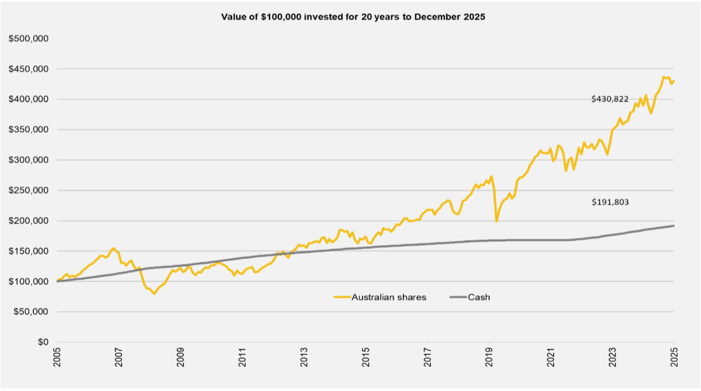
This chart highlights the importance of time in the market, not market timing. It compares the growth of a $100,000 investment in Australian shares with returns from cash.
Past performance is not a reliable indicator of future performance.
Source: FactSet, based on market index data updated to 31 December 2025. Australian shares: ASX All Ordinaries Accumulation Index. Cash: Bloomberg AusBond Bank Bill Index.
Yes, holding your nerve in volatile markets can be tough. But that job is made easier with an adviser to keep you disciplined within a structured plan that allows you to sleep at night.
That doesn’t mean you ignore change. It does mean making smart decisions based on your long-term goals, not on this week’s headlines.
So, take the emotion out of investment. It gives your strategy time to work and allows you to focus on all those things you love – like good comedy.
The information in this article is of a general nature only and does not take into account your personal objectives, financial situation or needs. Because of that, before acting on the information, you should consider its appropriateness to you, having regard to your personal objectives, financial situation and needs. Before making a decision to acquire a financial product, you should also read and consider the relevant Product Disclosure Statement (PDS).