We use cookies to improve your experience on our website. By continuing you acknowledge cookies are being used.

While there’s little magic to investing, there is one element so remarkable that it is often called the eighth wonder of the world.
We’re talking about ‘compounding’. This describes how your money, once invested, starts generating its own growth. It’s what happens when you accumulate returns on both your original investment and on the gains that this sum generates.
Let’s say a farmer plants a thousand seeds. Each new plant produces its own seeds that are then replanted. This makes the next harvest much bigger. In other words, the system begins to feed itself. That’s compounding at work.
Similarly, the longer your money remains invested, the more opportunity it has to grow. This accelerating effect is why compounding inspires such awe. It rewards not just capital, but time.
With shares, compounding comes from capital growth (the rise over time in share prices) and reinvested dividends. With cash and fixed income, it comes from reinvested interest payments.
This example compares two scenarios, both when investing $50,000 in an interest-bearing account, at 8% a year. In the first, by pocketing the interest, you earn $40,000 over 10 years from your original stake. In the second, you earn 45% more just by re-investing the interest.
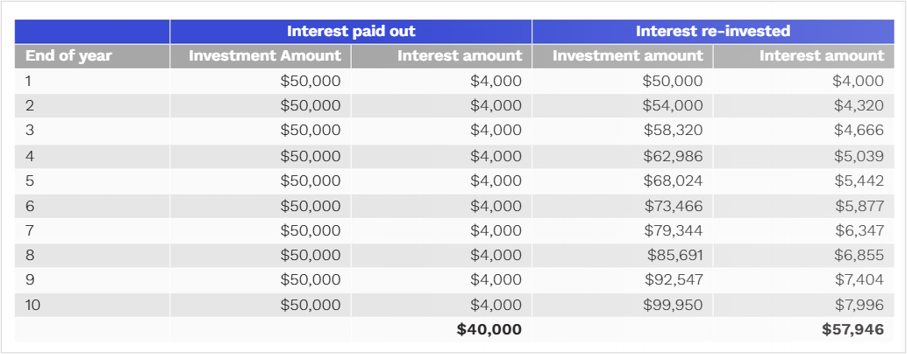
So, compounding is not magic after all. It’s just your money working for you. All you need are time, consistency and patience. It’s also why the earlier you start investing, and the longer you stick at it, the better – a task made easier with a professional adviser to guide you.
The information in this article is of a general nature only and does not take into account your personal objectives, financial situation or needs. Because of that, before acting on the information, you should consider its appropriateness to you, having regard to your personal objectives, financial situation and needs. Before making a decision to acquire a financial product, you should also read and consider the relevant Product Disclosure Statement (PDS).